How Does a Rechargeable Blender Work? Understanding the Battery, Motor, and Blades
Imagine making a fresh smoothie while travelling, exercising outdoors, or relaxing at the beach without needing a wall socket. That's exactly what makes rechargeable blenders so popular. These compact appliances combine portability with convenience, allowing you to blend drinks almost anywhere.
But how do they actually work?
The answer comes down to three essential components working together: the battery, the motor, and the blades. Understanding these parts can help you choose a better blender and get the best performance from it.
What Is a Rechargeable Blender?
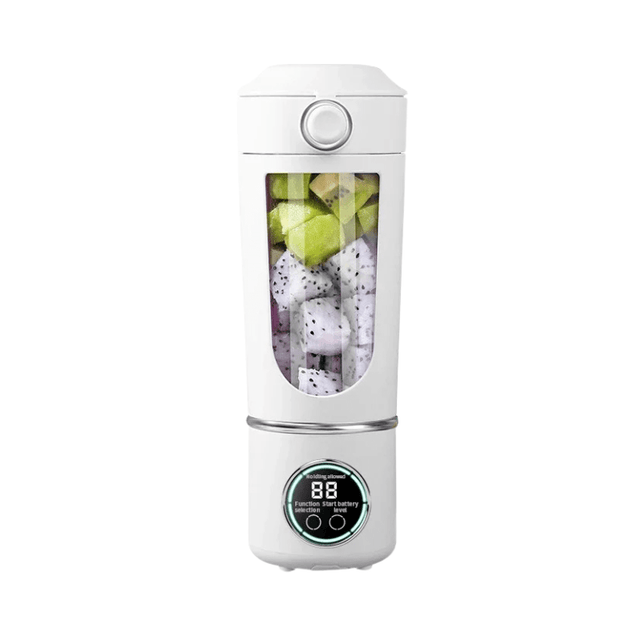
A rechargeable blender is a compact blending device powered by a built-in battery rather than a direct electrical connection. Unlike traditional countertop blenders, it doesn't need to stay plugged in while operating.
Most models include a blending cup, a rechargeable battery, a motor, and a blade assembly in a single portable unit. Once charged through a USB-C cable, the blender can prepare smoothies, protein shakes, juices, and other light blends wherever you are.
Its biggest advantage is simple: portability. Whether you're at work, in the gym, camping, or travelling, you can blend ingredients without searching for a power outlet.
The Core Components Behind Every Rechargeable Blender
To understand how these devices operate, let's look at the three main parts that turn ingredients into a smooth drink.
1. Battery: The Power Source
At the heart of every rechargeable blender is a lithium-ion battery. This battery stores energy and supplies power to the motor whenever you start blending.
Battery capacity is typically measured in milliamp-hours (mAh). In general, larger batteries provide more blending cycles before needing a recharge.
Here's a rough idea of what to expect:
2. Motor: The Engine That Drives the Blend
The motor is responsible for converting battery power into blade movement. Once activated, it spins the blade assembly at high speeds to process ingredients.
Many rechargeable blenders operate between 15,000 and 25,000 revolutions per minute (RPM), allowing them to handle fruits, vegetables, protein powders, and soft ingredients efficiently.
There are generally two motor types:
Brushed Motors
More affordable
Common in entry-level models
Effective for everyday blending
Brushless Motors
More energy efficient
Produce less noise
Generate less heat
Typically last longer
If durability and performance are priorities, a brushless motor is often worth considering.
3. Blades: The Mixing and Cutting System
The blades are the part that physically breaks down ingredients. Most rechargeable blenders use stainless steel blades because they resist rust and maintain sharpness over time.
You'll commonly find either four-point or six-point blade systems. Their curved design helps create a vortex inside the cup, pulling ingredients toward the centre for more consistent blending.
Since portable blenders operate with less power than full-size kitchen blenders, blade design plays a significant role in overall performance. A well-designed blade system can dramatically improve blending efficiency.
Additional Components That Matter
While the battery, motor, and blades do most of the work, a few other parts contribute to the overall user experience.
Blending Cup
Most portable blender jars double as drinking bottles. Look for materials such as BPA-free Tritan or high-quality PETG plastic, which are durable, lightweight, and food-safe.
Charging Port
Modern rechargeable blenders typically feature USB-C charging. This makes charging convenient because the same cable can often be used for phones, tablets, and power banks.
Safety Features
Many models include built-in safety systems that prevent the motor from running if the cup isn't properly attached. This helps avoid accidental operation and protects internal components.
Why Portable Blenders Have Different Performance Than Countertop Models
One common misconception is that rechargeable blenders should perform exactly like large kitchen blenders.
In reality, they're designed for different purposes.
A typical rechargeable blender produces between 40 and 120 watts of power, while many countertop blenders exceed 1,000 watts.
Because of this difference, portable blenders excel at:
Smoothies
Protein shakes
Soft fruits
Yogurt-based drinks
Leafy greens
However, they may struggle with:
Large ice cubes
Frozen fruit chunks
Hard nuts
Dense ingredients
The trade-off is simple: you sacrifice some power in exchange for portability and convenience.
Are Rechargeable, Portable, and Cordless Blenders the Same?
These terms are often used interchangeably, but there are slight differences.
Rechargeable blender: Uses a built-in rechargeable battery.
Cordless blender: Operates without being connected to a power outlet during use.
Portable blender: Designed to be lightweight and easy to carry.
Most modern personal blenders fit all three descriptions, but manufacturers may emphasize one feature more than another. We’ve untangled them in our explainer on rechargeable vs cordless vs portable blenders.
Frequently Asked Questions
How many smoothies can a rechargeable blender make on one charge?
Battery capacity determines runtime. Smaller models typically provide around 10–15 blends, while larger-capacity units can produce 20–30 or more before requiring a recharge.
Can I recharge my blender using a power bank?
Yes. Most rechargeable blenders support USB-C charging and work with standard power banks, making them convenient for travel and outdoor activities.
Are portable blender cups food-safe?
Quality models usually use BPA-free materials such as Tritan or PETG. Always check product specifications to confirm food-safe construction.
How long does charging usually take?
Most rechargeable blenders require between one and three hours for a full charge, depending on battery size and charging speed.
Final Thoughts
Rechargeable blenders may look simple from the outside, but they're powered by a smart combination of battery technology, high-speed motors, and precision-designed blades. Together, these components make it possible to enjoy fresh drinks almost anywhere.
If you're frequently on the move and want a convenient way to prepare smoothies, shakes, or blended beverages, a rechargeable blender can be a practical addition to your daily routine.

.jfif)
